How Long Does It Take to Get Wedding Photos Back?
Typical turnaround for sneak peeks, full wedding galleries, albums and films; what happens week by week; why peak season takes longer; whether three months is too long; when and how to follow up; and how photographers can run the wait.
Short answer
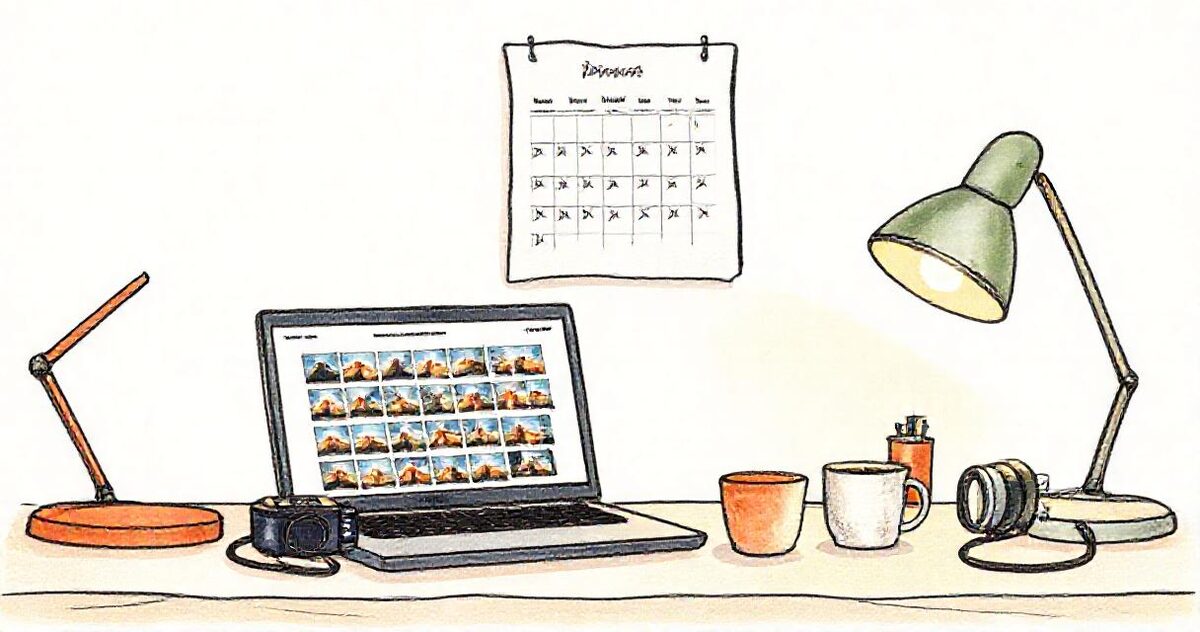
A sneak peek of 15 to 40 photos usually arrives within 2 to 7 days and the full wedding gallery in 4 to 8 weeks, with 10 to 12 weeks common in peak season. Albums take another 4 to 8 weeks after you choose the photos, and wedding films often take 2 to 4 months. The figure that matters is the one in your contract.
The wedding was three weeks ago. You have seen a handful of photographs, everyone keeps asking when the rest are coming, and the silence is starting to feel personal. It almost never is. Wedding photos take weeks for real, unglamorous reasons, and what turns a normal wait into worry is usually not the wait itself but not knowing how long it is supposed to be.
This guide answers the question properly: typical turnaround times for every part of a wedding delivery, what is actually happening during those weeks, what makes one wedding slower than another, when it is reasonable to follow up and how, and, for photographers, how to run the wait so nobody ever has to ask.
- The short answer
- Typical turnaround times, by deliverable
- What happens, week by week
- Why editing takes as long as it does
- What makes one wedding slower than another
- Peak season and the queue
- The sneak peek: why it arrives first
- Is three months too long?
- For couples: setting expectations before you book
- When to follow up, and how
- If the photos are genuinely late
- For photographers: running the wait
- The two-line update that stops the chasing
- Delivering faster without rushing the edit
- After the gallery: albums, prints and video
The short answer
A sneak peek of 15 to 40 photographs usually arrives within 2 to 7 days. The full wedding gallery usually arrives in 4 to 8 weeks, and 10 to 12 weeks is slow but common for a busy photographer in peak season. Albums follow 4 to 8 weeks after you have chosen the photos for them, and a wedding film typically takes longer than the photographs, often 2 to 4 months.
The figure that actually matters is the one written in your contract. If the contract says twelve weeks, twelve weeks is on time, however long it feels. If the contract says nothing, that is the first thing worth fixing, before the wedding rather than after.
Typical turnaround times, by deliverable
| Deliverable | Typical | Slow but not alarming | Worth asking about |
|---|---|---|---|
| Sneak peek (15–40 photos) | 2–7 days | 2 weeks | Nothing after 3 weeks and no word |
| Full wedding gallery | 4–8 weeks | 10–12 weeks in peak season | Past the contract date |
| Engagement or portrait session | 1–3 weeks | 4 weeks | 6 weeks |
| Elopement or registry office wedding | 2–4 weeks | 6 weeks | Past the contract date |
| Multi-day wedding (two or more events) | 8–12 weeks | 16 weeks | Past the contract date |
| Album design, after you choose | 2–6 weeks for the first draft | 8 weeks | No draft after 10 weeks |
| Printed album, after you approve | 3–6 weeks | 8 weeks | Ask for the lab's estimate |
| Wedding film | 2–4 months | 6 months | Past the contract date |
These are the ranges you will see from established full-time photographers. Someone who shoots a few weddings a year alongside another job can be faster in quiet months and much slower in busy ones. A photographer with an editing assistant or an outsourced editor can be faster all year. Neither is wrong; what matters is that they tell you which one they are.
What happens, week by week
Couples often picture the photographer coming home, plugging in a card and pressing export. Here is what the weeks after a full-day wedding usually look like for a working photographer:
- The night of the wedding and the next morning: backups. Before anything else, every card is copied to at least two places, usually a working drive and a separate backup, often with a cloud copy as well. Nothing creative happens until the photographs exist somewhere other than the cards. Our backup workflow guide covers why this step is never skipped.
- Days 1 to 7: the sneak peek. The photographer pulls a small set of strong frames, edits them first and sends them, often the next morning. It sets the look for the whole edit, and it gives you something to post while you wait.
- Weeks 1 to 3: the queue. In busy months your wedding waits behind the weddings shot before it. This is the part couples see as "nothing happening", and it is the main reason summer weddings take longer.
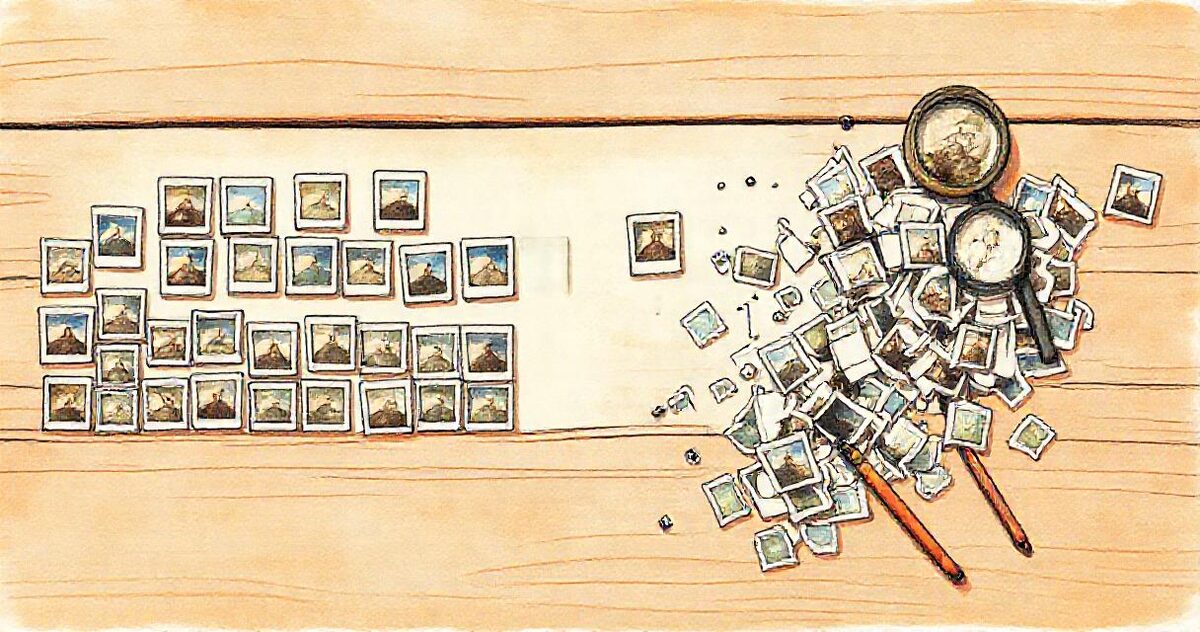
- Your editing week: culling. 2,000 to 4,000 frames are reduced to the 400 to 800 you will receive. Blinks, misfocus and near-identical bursts go; the best version of every moment stays. For most photographers this is a full day of concentrated work per wedding, sometimes two.
- Your editing week: colour and exposure. Every kept frame is corrected, and the hard part is consistency: morning light by a window, a dim church, harsh midday sun and a dark dance floor all have to look like they belong to the same day.
- Your editing week: retouching. Selected portraits get closer work: a stray hair, a fire exit sign, a guest's elbow in a couple portrait.
- Export, check and deliver. Files are exported at full resolution, checked once more, uploaded and sent as a gallery.
Why editing takes as long as it does
A rough budget for one full-day wedding looks something like this: half a day for backups and import, a day for culling, one to two days for colour, half a day to a day for retouching and checks, and a few hours for export, upload and delivery. That is three to five working days of concentrated work for one wedding, and it is the reason a photographer who shoots two or three weddings a week in summer cannot deliver all of them in a fortnight.
Editing also cannot be done in every spare hour. Culling and colour need a calibrated screen, a quiet room and attention; a photographer who spends Thursday and Friday on client calls and Saturday at a wedding has Monday to Wednesday for editing, and some of those days go to travel, enquiries and recovering from twelve-hour shoot days. The edit that looks slow from the outside is often a photographer doing it properly rather than in a hurry.
What makes one wedding slower than another
- Hours of coverage. Ten hours produces far more frames to cull and edit than six.
- A second shooter. Two cameras add 30 to 50 percent more frames, and the two sets have to be merged and matched in colour.
- Difficult light. Mixed light, coloured uplighting, a dark venue and flash on the dance floor take longer to correct than an outdoor summer ceremony.
- Several events. A multi-day wedding is really two or three weddings delivered together.
- The editing style. A light, natural edit is faster than a heavily stylised one, and film photographers wait for the lab before they can start.
- Add-ons. Extra retouching, black and white versions of every frame or a slideshow all add days.
- Your date. More on this below; it is often the biggest factor of all.
Peak season and the queue
Wedding photography is intensely seasonal. In many countries most weddings happen between May and October, so a photographer who shoots twenty-five weddings a year may shoot eighteen of them in five months. A wedding in late August joins a queue of everything shot in June and July; a wedding in February is often the only one in the edit that month.
This is normal and has nothing to do with how much your photographer cares about your day. It is, however, worth knowing before you book. If your date is in peak season, ask "what is your turnaround for a wedding in August specifically?" rather than "what is your turnaround?", because many photographers quote their average and the average includes January.
The sneak peek: why it arrives first
Nearly every wedding photographer sends a small set of photographs within days of the wedding. Partly it is kindness: the wait for the full gallery is hard, and families want something to look at. Partly it is practical: the sneak peek is the photographer setting the look of the whole edit, and it is the photographs most couples share first.
If your photographer has not mentioned one, it is completely reasonable to ask. And if you are a photographer reading this, our guide to sending a wedding sneak peek the next morning covers how many to choose, export settings for phones and how to make the sneak peek link grow into the full gallery.
Is three months too long?
Not on its own. Twelve weeks is towards the slow end, but it is common for a full-time photographer in peak season, and it is the number many photographers write into their contracts precisely so that they are never late. If your contract says twelve weeks and you have been kept informed, three months is simply the agreement.
Three months becomes a problem when it was never agreed, when it is well past what the contract says, or when the photographer has gone quiet. Slowness with communication is a busy professional. Silence without a date is the thing worth acting on.
For couples: setting expectations before you book
The best time to settle turnaround is before you sign, not week six. Four questions cover it:
- "When will we receive the full gallery for a wedding in our month?" Ask for a number of weeks and ask whether it is in the contract.
- "Will there be a sneak peek, and roughly when?"
- "How will you deliver them?" A private online gallery, a download link, a USB box, prints? How long will the gallery stay online? Our guide on how long client galleries should stay online covers what to expect.
- "If we order an album, how long after we choose the photos?"
Then check the contract says what you were told. Delivery time, delivery method and how long the gallery stays online are three of the clauses we cover in what to include in a photography contract. Our questions to ask your wedding photographer covers the rest.
When to follow up, and how
Reasonable moments to send a message:
- No sneak peek after three weeks and no word about one. A gentle question is fine.
- The contracted date has arrived. Ask for an expected date.
- Two weeks past the contracted date with no update. Follow up again and ask for a specific day.
How you ask makes a difference. One friendly message asking when, rather than why, gets the best response:
Hi Sam, we've loved the sneak peek and the family keeps asking about the rest! Could you let us know roughly when the full gallery will be ready? Thank you.
Photographers respond well to that. They respond less well to weekly reminders, messages to their personal accounts or public posts asking where the photos are, all of which tend to slow things down rather than speed them up.
If the photos are genuinely late
Real lateness is uncommon, but it happens: illness, a family emergency, a hard drive failure, or occasionally a business in trouble. If the contracted date has passed by several weeks and messages are going unanswered:
- Write, don't just call. An email creates a record. Quote the delivery clause from your contract and ask for a delivery date.
- Ask for a partial delivery. If the full edit is far off, ask for the photographs that are ready, or the sneak peek set at full resolution, in the meantime.
- Allow a reasonable final deadline, two weeks is common, stated in writing.
- Only then escalate: a formal letter, your card provider if you paid by card, or the consumer route in your country. Keep copies of everything.
Most late galleries are resolved at step one. A photographer who has fallen behind is usually embarrassed rather than unwilling, and a clear, polite message with a date in it is easier to answer than a vague one.
For photographers: running the wait
Almost every anxious "any news on the photos?" email is preventable, and prevention costs less time than answering them:
- Put the turnaround in the contract, and make it honest for the season. "Up to 8 weeks, up to 12 for weddings between June and September" is better than one optimistic figure. Delivering early delights people; delivering late gets reviewed.
- Send the sneak peek fast. Within 48 hours if you can. It buys weeks of patience for an hour of work.
- Tell couples where they are in the queue. "Yours is third in the edit, so expect it the first week of October" turns an unknown wait into a known one.
- Send one update halfway. More on this below.
- Never go quiet. Slowness is forgiven. Silence turns into the one-star review.
- Use the same link for everything. If the sneak peek, the full gallery and the film all arrive at one gallery link, the couple never has to hunt for "the new email".
The two-line update that stops the chasing
Halfway through the wait, send this:
Hi Priya and Tom, a quick note to say your wedding is next in the edit and I'm starting on it this week. The full gallery will be with you by Friday 17 October, at the same link as your sneak peek.
It takes thirty seconds to write and it answers the three questions every couple has: has it started, when will it be done, and where will it be? A couple who has a date has no reason to send "any news?", and if the date then slips, you already have a thread to reply in.
Delivering faster without rushing the edit
Turnaround is easier to shorten in the steps around the edit than in the edit itself:
- Cull faster, not carelessly. A dedicated culling tool, or a first pass at a fixed speed with a second pass for close calls, saves hours per wedding.
- Build your colour once. A small set of tested presets for your usual light gets most frames 80 percent of the way.
- Outsource in peak season. Many photographers send colour to an editing service in summer and keep culling and retouching in-house.
- Remove the upload step. If you deliver from a Google Drive folder, you can turn that folder into a client gallery with GalleryLink instead of re-uploading thousands of files to a separate gallery service. Publish the gallery with the sneak peek in it, then export the full set into the same folder when it is ready: the gallery fills up on its own and the link never changes. How to deliver wedding photos to clients walks through the whole workflow.
- Stage the delivery. Sneak peek first, then the ceremony and portraits, then the rest. Each stage reaches the couple the day it is finished, rather than everything waiting for the slowest part.
After the gallery: albums, prints and video
The gallery is not always the end of the wait. If an album is included, the clock restarts when the couple chooses their photographs, and the most common delay in album delivery is not the designer or the lab but the selection itself: choosing 60 photographs from 600 is hard, and many couples put it off for months. Photographers can help by setting a target ("choose your 60 favourites by 30 November") and by letting couples pick inside the gallery rather than in a spreadsheet of file numbers. Our client proofing and photo selection workflow covers how.
Wedding films usually take longer than photographs because a film is edited from many hours of footage, with music licensing and sound to finish. If you are delivering both, keeping them at the same link helps; our guide on delivering wedding videos to clients covers formats that play on every phone.
And once everything has arrived: download a full copy and keep it in two places. Online galleries are for viewing and sharing, not for keeping forever. What to do with your wedding photos covers backups, prints and sharing them with family.